August 30, 2021 | Elise Wildman | UC Davis
I am a political science major at UC Davis; this summer, I was an organizer with Un-PAC, a nonpartisan organization dedicated to democracy reform and mobilizing students and young people to get the For the People Act passed. The fight to pass S1, the For the People Act, much-needed structural democracy reform, exemplifies the degree to which corporations are represented in our government, not the people. Our representatives have continued to vote on behalf of their donors, disregarding the plight of students. As students, we are faced with unprecedented amounts of student debt amidst rising costs of living and the bleak future of an uninhabitable planet. We do not feel heard, nor represented, as decision-makers at every level of government are complicit. However, we have the potential to be unstoppable. As students and young people, we have cultivated vast networks of incredibly talented peers with an array of skills and interests. We have the opportunity to transform these networks into vehicles of social change. Through civic engagement, we can mobilize our vast networks of peers to take action.
Civic engagement can take many forms. Voting, especially in local elections, makes an impact. Furthermore, we must extend our civic engagement beyond electoral campaigns. Protesting, forming pressure and divestment campaigns to target local decision-makers, educating others about social justice issues, and listening to the needs of marginalized groups in your community are all ways to build power in your community through civic engagement.
Our level of civic engagement will have visible effects on local, statewide, national, and global levels. I’m extremely passionate about climate justice. The climate emergency affects all of us, especially marginalized communities and indigenous people. Line 3, a tar sands pipeline, is being built on Anishinaabe territory, violating their treaty rights. The construction of Line 3 will, and has already, contributed to the destruction of bodies of water that sustain vital ecosystems. Enbridge, the Canadian corporation behind the destruction in Minnesota, is permitted by the State of Minnesota to use 5 billion gallons of water, endangering wild rice vital to the Anishinaabe people. Water protectors on the frontlines who rightfully protest are met with violent Minnesota police, paid for by Enbridge.
I, like many other students and young people, recognize that this is another instance of corporations, with the aid and protection from the government, destroying the environment. Oil spills have already been reported along the Line 3 construction route. Millions of people depend on the rivers and lakes Line 3 crosses for clean drinking water. Our nation’s water supply is at stake. This is not simply an issue affecting indigenous communities in Minnesota. The water protectors on the frontlines fight with the utmost courage, protecting all of us on the planet who will be ultimately affected by the climate crisis and the destruction caused by multinational corporations.
As an organizer, I have had the honor of meeting and working with so many talented and passionate students and young people. Whether you participate in civic engagement already or are looking to begin, we all have the tools to make fundamental change. Civic engagement is traveling to the frontlines in Minnesota to help on the ground. Civic engagement is educating your friends about Line 3, uplifting indigenous voices, and taking action at stopline3.org. If you’re anxious about starting, remember that we have a right and duty to speak out and take action about the issues that affect all of us. When urging your elected officials to stand with the people, not corporations and their donors, remember two things:
Our elected officials have the obligation to listen to our voices, and we have the power to leverage our support for them.
When we mobilize our own networks of fellow students and young people, what we will accomplish will be revolutionary.
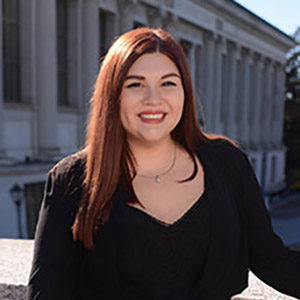 Alexis Atsilvsgi Zaragoza is the 2020-21 Student Regent-designate and the 2021-22 Student Regent. She is an undergraduate transfer student at the University of California, Berkeley in the department of Geography. Ms. Zaragoza is a McNair Scholar studying the rural spatial imagination for students of color in access to higher education and plans on pursuing Ph.D. programs in Democracy or Political Sociology upon graduation in 2022. Previously she studied at Modesto Junior College earning honors degrees in Geography and Political Science and certifications in Ethnic Studies and Communications. Her undergraduate honors research projects are in the areas of public education, voting rights, and democracy. Ms. Zaragoza is the previous student board member in the California Community Colleges from 2018-2020, appointed by Governor Brown. During her time on the CCC board, she served on committees addressing remedial education, ESL accommodations, and faculty diversity. She also had roles on the systemwide Cal Grant Reform workgroup and Diversity Equity and Inclusion Committee, as well as serving as a Trustee to Calbright College—the first fully online community college in the world. In 2018, she also served as a campaign organizer for now-Congressman Josh Harder (D-10). As a Chicana and citizen of the Cherokee Nation, she is passionate about the rights of Indigenous peoples, creating a better campus climate for all UC students—including undocumented students, and fostering greater diversity among students and faculty in the UC system.
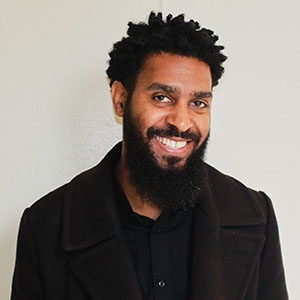 Jamaal Muwwakkil M.A. is the 2020-21 Student Regent. He is a graduate student at the University of California, Santa Barbara, in the Ph.D. program where his research specializations include African American language and culture, sociocultural linguistics and political discourse. As a first-generation college student, Mr. Muwwakkil transferred from Los Angeles City College to UCLA, where he earned his bachelor’s degree in applied linguistics with college and departmental honors. While at UCLA, he completed an undergraduate thesis focused on the institutional discourse surrounding peer-to-peer file sharing. At University of California, Santa Barbara, his M.A. thesis addressed the discourse of politically conservative student groups on a UC campus. His dissertation research focuses on institutional discourses concerning diversity and inclusion at minority serving institutions. Consistently engaged in advocacy, Mr. Muwwakkil served as a peer mentor with the Center for Community College Partnerships while an undergraduate, and served as president of the Black Graduate Student Association at UC Santa Barbara. Additionally, he works with UC-HBCU Pathways Initiative and other outreach programs to aid in UC access for underrepresented students.
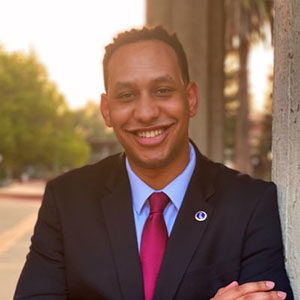 Devon Graves was the 2018-19 Student Regent. At the time of his appointment, he was a student at the University of California, Los Angeles, Graduate School of Education and Information Studies working towards a doctorate degree in Higher Education and Organizational Change. Mr. Graves is a proud product of the California public higher education system and is the first in his family to graduate from college. He has been heavily involved as a student leader. He has served as Attorney General for the Cal Poly Pomona Associated Students, Inc. (ASI), and served two terms as the Chair of the California State Student Association (CSSA), the recognized statewide advocacy group for the 465,000 California State University students. Mr. Graves has also served two terms as a gubernatorial appointee on the California Student Aid Commission. He also served as the primary negotiator representing student consumers in the United States Department of Education negotiated rulemaking process for the Title IV Loan Issues rule making. Mr. Graves’ research focuses on community college students’ experiences with financial aid. He is committed to the study of higher education and wants to research different financial aid programs to ensure that students have all the tools they need to understand the cost of college, take advantage of all financial aid opportunities, and select the college that best suits them. Mr. Graves received his B.A. from Cal Poly Pomona and his M.A. from UCLA.
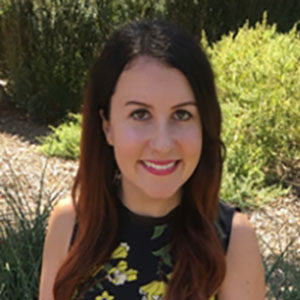 Hayley Weddle was the 2019-20 Student Regent. During her term as a Regent, she was a student at the University of California, San Diego, working towards a doctorate degree in Education Studies: Transforming Education in a Diverse Society. She is currently the co-chair of the UC San Diego Basic Needs Committee and the UC San Diego graduate student representative to the UC systemwide Title IX Advisory Board. Previously, she served as the Chief of Staff for the UC San Diego Graduate Student Association. Ms. Weddle completed her MA in Higher Education Leadership at San Diego State University, where she developed a passion for research related to access, equity, and student success. Following her time at SDSU, she worked for several years as a staff member at UC San Diego advising the undergraduate student government. In this role, she oversaw the development of the campus’s first food pantry and currently represents UC San Diego on the system-wide Food Access and Security committee. As a doctoral student, she has extended her research to the K-12 system, focusing on efforts to improve instruction in low-performing middle schools. Ms. Weddle graduated summa cum laude from UC Santa Barbara in 2011 double majoring in Accounting and Sociology and received her master’s degree in postsecondary educational leadership from San Diego State University in 2013.
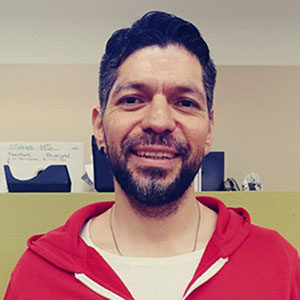 Francisco Dueñas is the Executive Director for Housing Now!, a California statewide housing justice advocacy coalition. He was previously the Director of Housing Campaigns for the Alliance of Californians for Community Empowerment (ACCE), a position which had him serving as the leading coordinator of Housing Now! for the last two years. Prior to joining ACCE, Francisco was the Director of Diversity and Inclusion for Lambda Legal, a national LGBT Impact litigation organization, where he worked for 14 years. He has also served on the Los Angeles City Human Relations Commission. He is from South Gate, California.
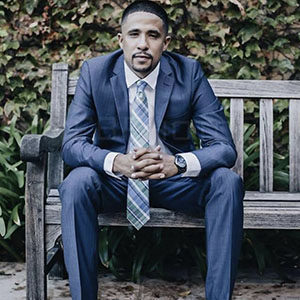 Civic Leader. Professor. Political Activist. Author and Motivational Speaker. Born in a prison cell to an incarcerated mother and a father unknown, Christian D. Green has overcome many obstacles rare, atypical and uncommon to others. Christian David Green is a first generation, former foster youth, non-traditional graduate from the Antelope Valley, specifically Lancaster, California. Christian graduated spring 2016 from UCLA with a Bachelor of Arts in Sociology with a minor in African American Studies. And then Graduated with M.A. in African American Studies spring 2018. Currently serves on the US Truth Racial Healing and Transformation Coalition”
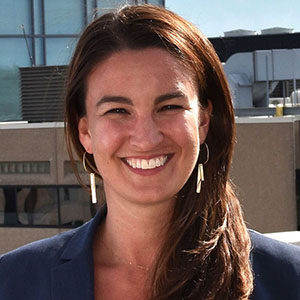 As California Affordability Program Director at The Institute for College Access & Success (TICAS), Laura Szabo-Kubitz works to eliminate equity gaps and enable all Californians to attend and succeed in college by identifying and addressing college affordability challenges across the state. Along with research, policy analysis, and advocacy, Laura leads Californians for College Affordability, a diverse coalition of more than two dozen organizations united in strengthening need-based financial aid for the state’s underserved, underrepresented students. She received her BA in English from Oberlin College, and her MA in Education Policy and Management from the Harvard Graduate School of Education.